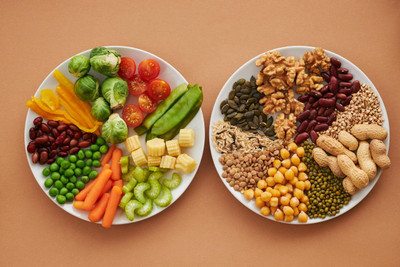
If you've spent more than five minutes Googling fertility nutrition, you've probably run into strong opinions about what you should (or definitely should not) be eating.
Plant-based diets! No - animal protein only! Cut carbs! Eat liver! Avoid soy forever!
Let's take a breath together — and let me share what you actually need to know.
When it comes to your fertility, the question isn't plant-based or animal-based - it's how each approach supports your hormones, egg quality, sperm health, and overall reproductive wellness.
We know how overwhelming the diet debate can feel, especially when you're already navigating so much on your fertility journey. So let's set the noise aside and look at what the research actually tells us, the real pros and cons of each approach, and how to build a fertility-friendly diet that works for your body and your life.
Why Does Diet Matter for Fertility Regardless of Eating Style?
Key characteristics of fertility-supportive diets tend to include:
- High intake of vegetables and fruits
- Whole grains over refined carbs
- Healthy fats (olive oil, nuts, fish)
- Moderate amounts of high-quality animal protein
- Minimal ultra-processed foods
Your takeaway? Balance matters more than labels.
What About Men's Fertility?
You may be wondering about this one, and the answer is straightforward: your diet matters just as much for sperm health.
Both plant-based and animal-based diets can support male fertility when they include:
- Adequate zinc and selenium
- Omega-3 fatty acids
- Antioxidant-rich foods
If you eat a poor-quality diet - regardless of philosophy - you're more likely to see lower sperm count, reduced motility, and increased DNA damage.4
So… Which Diet Is Better for Fertility?
How Do You Build a Fertility-Supportive Diet?
Frequently Asked Questions
Is a plant-based diet better for fertility than eating meat?
Not necessarily. Plant-based diets can support fertility when well-planned, but they're not automatically superior. Nutrient adequacy is key.
Can eating meat harm fertility?
If you eat large amounts of processed meats and saturated fats, you may see a negative impact on your fertility — but moderate amounts of high-quality animal protein can support your reproductive health.
What if my partner and I eat differently?
That's completely fine. Fertility diets don't need to be identical - just supportive of each person's nutrient needs.
Do I need to pick one approach?
No. Many fertility experts recommend a blended approach that emphasises whole plant foods alongside strategic animal-based nutrients.
Should I change my diet immediately when trying to conceive?
You'll find gradual, sustainable changes more effective than drastic shifts. You can expect most fertility-related dietary benefits to show up over approximately three months, reflecting the roughly 85–90 day window during which the eggs you will ovulate are completing their final stages of development.6
Important: This article is for informational purposes only and does not constitute medical advice. Consult your healthcare provider before starting any supplement regimen, especially if you are pregnant, trying to conceive, or undergoing fertility treatment.
These statements have not been evaluated by the Food and Drug Administration. These products are not intended to diagnose, treat, cure, or prevent any disease.
References
- Chavarro JE, Rich-Edwards JW, Rosner BA, Willett WC. Diet and lifestyle in the prevention of ovulatory disorder infertility. Obstet Gynecol. 2007;110(5):1050-8.
https://pubmed.ncbi.nlm.nih.gov/17978119/ - Gaskins AJ, Chavarro JE. Diet and fertility: a review. Am J Obstet Gynecol. 2018;218(4):379-389.
https://pubmed.ncbi.nlm.nih.gov/28844822/ - Karayiannis D et al. Association between adherence to the Mediterranean diet and semen quality parameters in male partners of couples attempting fertility. Hum Reprod. 2017;32(1):215-222.
https://pubmed.ncbi.nlm.nih.gov/27816918/ - Salas-Huetos A, Rosique-Esteban N, Becerra-Tomas N, et al. The effect of nutrients and dietary supplements on sperm quality parameters: a systematic review and meta-analysis of randomized clinical trials. Adv Nutr. 2018;9(6):833-848. doi:10.1093/advances/nmy057
https://pubmed.ncbi.nlm.nih.gov/30462179/ - ASRM Practice Committee. Optimizing natural fertility: a committee opinion. Fertil Steril. 2022;117(1):53-63.
https://www.fertstert.org/article/S0015-0282(21)02039-5/fulltext - Gougeon A. Human ovarian follicular development: from activation of resting follicles to preovulatory maturation. Ann Endocrinol (Paris). 2010;71(3):132-143.
https://pubmed.ncbi.nlm.nih.gov/20362973/

Marina Carter
Fertility Health Writer at FertilitySmart
Marina Carter is a specialist health writer with nearly a decade of experience in reproductive health, fertility nutrition, and evidence-based conception support. She has authored over 30 in-depth articles for FertilitySmart, translating peer-reviewed research into clear, practical guidance for individuals and couples on their fertility journey. Read full bio →