Selenium is an essential trace mineral that the male reproductive system depends on to build healthy sperm, it is built into selenoproteins that protect sperm from oxidative damage and give the sperm tail its structural backbone. Under GB regulation, selenium carries an authorised health claim that it "contributes to normal spermatogenesis."
If you're trying to conceive, selenium is one of the nutrients you'll see named on most male fertility supplements, usually somewhere near zinc. The honest picture is more specific than the labels suggest: selenium is genuinely necessary for normal sperm production, and topping up a real shortfall can help, but more is not better, and selenium has one of the narrowest safe windows of any mineral. Here's what the research actually shows, and how to act on it sensibly.
- Selenium is concentrated in the testes and built into selenoproteins, especially glutathione peroxidase 4 (GPx4), that protect sperm from oxidative damage and form the structural backbone of the sperm tail.
- GB law authorises one fertility-relevant selenium claim: it "contributes to normal spermatogenesis." That is selenium's claim, not zinc's, a distinction worth knowing when judging product marketing.
- In men with low selenium status, supplementation has improved sperm motility, a 1998 RCT in selenium-deficient Scottish men is the clearest example, and a 2018 meta-analysis linked selenium to a 3.30% rise in total motility.
- The benefit appears mainly when correcting a deficiency; the 2022 Cochrane review rates the overall antioxidant evidence as low certainty, so selenium is not a guaranteed "fertility booster" for men who already have enough.
- UK adult men need 75 micrograms (µg) of selenium a day; the label NRV is 55 µg. The NHS advises that 0.35 mg (350 µg) or less a day from supplements is unlikely to cause harm.
- Brazil nuts are the richest source but their selenium content is extremely variable, fish, meat, and eggs are more reliable everyday sources.
What does selenium do in the body, and why do sperm cells need it?
Selenium is a trace mineral your body uses to build a small family of proteins called selenoproteins, which carry out its biological work, most of them antioxidant enzymes that neutralise harmful reactive oxygen species. Around 25 selenoproteins have been identified in humans, and several are essential to healthy sperm.1 The testis takes selenium so seriously that it holds onto its supply even when the rest of the body runs low.
Here's why that matters for you. Developing sperm are unusually vulnerable to oxidative damage: their membranes are packed with polyunsaturated fats, they carry very little internal repair machinery, and they generate a lot of reactive oxygen species while making energy to swim. Selenoproteins are a key part of the defence that keeps that oxidative stress in check.1 Without enough selenium, that protection weakens, and sperm quality, particularly the ability to move, tends to suffer.
There's a second, less obvious role that sets selenium apart from a general antioxidant: in maturing sperm, one selenoprotein stops being an enzyme and becomes structural scaffolding. We'll come to it next, because it's the mechanism most product pages skip, and it's the part worth understanding if you're choosing a supplement.
How do selenoproteins support spermatogenesis?
The standout selenoprotein for fertility is glutathione peroxidase 4 (GPx4), also called phospholipid hydroperoxide glutathione peroxidase (PHGPx). In the testis, GPx4 accounts for almost the entire selenium content, and it plays a remarkable double role.2 While sperm are forming, GPx4 works as an antioxidant enzyme, mopping up the lipid peroxides that would otherwise damage sperm membranes.
Then something unusual happens. As sperm mature, GPx4 switches off its enzyme activity and cross-links into a tough, insoluble protein that becomes a major structural component of the mitochondrial capsule in the sperm midpiece, the engine room just behind the head that houses the mitochondria powering the tail.2 Think of it as the same protein being repurposed from a fire extinguisher into part of the chassis. In selenium-deficient animals, this structure fails to form properly, producing sperm with impaired motility and midpiece defects. In men, lower GPx4 activity shows up in those with poorer sperm quality, and it correlates most strongly with forward motility.2
This is the mechanistic reason selenium is specifically tied to sperm production rather than fertility in general, and it's why the authorised wording you'll see on labels is about spermatogenesis, not a vague "boost."
What does the research show on selenium and sperm health?
The evidence is encouraging but modest, and it points one way: selenium helps most in men who start out short of it. The clearest trial, a 1998 randomised controlled study in selenium-deficient men, found supplementation improved sperm motility, and a 2018 meta-analysis linked selenium to a 3.30% rise in total motility.3,4
Look closer at that 1998 trial and the pattern sharpens. Conducted in the West of Scotland, a low-selenium region, this small trial gave 69 subfertile men with low selenium status either selenium, selenium plus vitamins, or placebo for three months. Selenium significantly raised blood selenium and sperm motility, and 5 of the treated men (11%) achieved paternity compared with none on placebo; sperm concentration was unchanged.3
Another line of evidence adds nuance, and a caveat. A large 2011 study gave 690 infertile men selenium with vitamin E for at least 100 days, reporting improved sperm parameters in 52.6% and a 10.8% spontaneous pregnancy rate, but it had no placebo group, so its results can't be cleanly separated from chance or natural variation.5
So how should you weigh all this? The fairest reading is that selenium matters most when you're short of it. The 2022 Cochrane review of antioxidants for male subfertility, the broadest assessment available, rates the overall evidence as low to very low certainty, with the effect on live birth still uncertain.6 The practical takeaway for you: correcting a genuine selenium shortfall is worth doing, but piling extra selenium on top of an adequate intake isn't supported, and, as the next sections explain, it carries real risk.
What is selenium's authorised health claim for fertility?
In Great Britain, selenium carries one fertility-relevant authorised health claim: it "contributes to normal spermatogenesis." That wording is set by the GB Nutrition and Health Claims Register, may only be used for foods that are at least a "source of selenium," and rests on a 2009 EFSA opinion finding a cause-and-effect link between selenium and normal sperm production.7,8
The register carries over the authorised claims from EU Regulation (EU) No 432/2012, and the exact wording matters. These claims describe selenium's role in normal bodily function, not treatment, cure, or enhancement. That distinction is deliberate and legally meaningful. A supplement may say selenium "contributes to normal spermatogenesis"; it may not say selenium "boosts fertility" or "increases sperm count," because those outcome claims are not authorised.
| Authorised selenium claim (verbatim) | What it means in plain English |
|---|---|
| Selenium contributes to normal spermatogenesis | Adequate selenium is part of how the body produces sperm normally. |
| Selenium contributes to the protection of cells from oxidative stress | Selenium helps defend cells, including sperm, against oxidative damage. |
| Selenium contributes to normal thyroid function | Selenium supports the thyroid, which has its own indirect role in reproductive health. |
One point worth clearing up, because it's widely muddled online: "contributes to normal spermatogenesis" is selenium's authorised claim, whereas zinc's fertility claims are different, zinc "contributes to normal fertility and reproduction," to "the maintenance of normal testosterone levels in the blood," and to "normal DNA synthesis." The two minerals are usually discussed together and often paired in formulas, but their authorised wording is distinct, which gives you a quick, useful test of whether a product's marketing is accurate.
How much selenium do you need?
UK adult men need 75 micrograms (µg) of selenium a day, according to NHS reference intakes, and most people can reach this through a varied diet.9 The Nutrient Reference Value (NRV) used on supplement labels is 55 µg. There is no benefit to exceeding your requirement, and with selenium, the gap between "enough" and "too much" is unusually small.
This narrow window is the most important safety point on the page. The NHS advises that taking 0.35 mg (350 µg) or less a day from supplements is unlikely to cause harm, and the UK Expert Group on Vitamins and Minerals set a Safe Upper Level of 0.45 mg (450 µg) a day from all sources.9,10 Sustained intakes above this can cause selenosis, with symptoms including hair loss, brittle nails, a garlic odour on the breath, digestive upset, and, at high levels, nerve problems.9,10 Because the therapeutic margin is so tight, this is one supplement where you'll want to treat high-dose single-mineral products with real scepticism.
| Selenium intake guidance (UK adults) | Amount |
|---|---|
| Recommended daily intake (men) | 75 µg/day |
| Nutrient Reference Value (label NRV) | 55 µg |
| Unlikely to cause harm from supplements (NHS) | 0.35 mg (350 µg)/day or less |
| Safe Upper Level, all sources (EVM 2003) | 0.45 mg (450 µg)/day |
There's a UK-specific wrinkle worth knowing: average selenium intakes in the UK and the rest of Europe have fallen over recent decades, partly because less selenium-rich North American wheat is used in the food supply. Selenium status here is generally lower than in North America, which is the backdrop to that Scottish trial, so a varied diet genuinely matters for you, but megadosing is still the wrong response.
Which foods are highest in selenium?
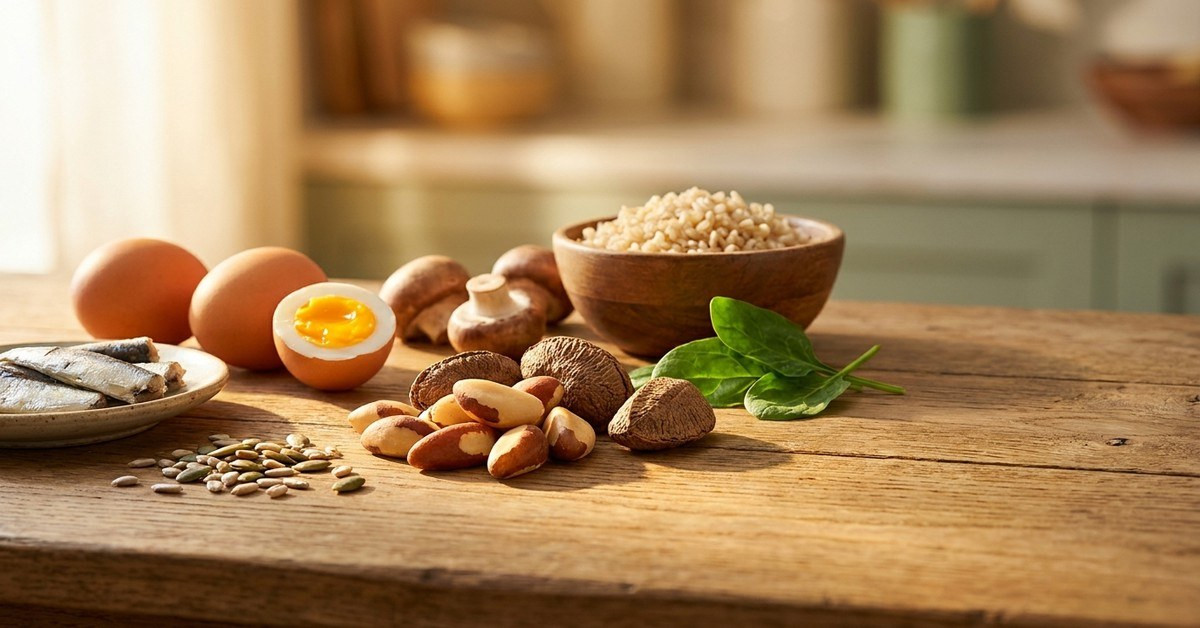
The richest dietary source of selenium is the Brazil nut, with fish, shellfish, meat, eggs, and to a lesser extent wholegrains and dairy providing reliable everyday amounts. For most people in the UK, including fish or meat a few times a week, plus eggs, comfortably covers selenium without any supplement at all.
Brazil nuts come with a big caveat, though. Their selenium content depends almost entirely on the soil the trees grew in, and it varies widely from batch to batch.11 One nut might supply your whole daily requirement; another from a different region might supply a fraction of it. That unpredictability makes Brazil nuts a poor way to hit a precise selenium target, and eating a large handful daily is an easy way to drift toward the upper limit. A couple of Brazil nuts a few times a week is plenty; a fistful every day is not a good idea.
| Food (typical serving) | Approximate selenium content |
|---|---|
| Brazil nuts (1 nut) | ~10-90+ µg (highly variable) |
| Tuna or sardines (100 g) | ~40-80 µg |
| Cod or other white fish (100 g) | ~30-45 µg |
| Lean meat or liver (100 g) | ~10-30 µg |
| Eggs (1 large) | ~15 µg |
| Wholemeal bread (2 slices) | ~5-15 µg |
A food-first approach has a clear advantage over single-nutrient supplements: whole foods deliver selenium alongside the other nutrients that matter for sperm health, zinc, omega-3 fats, and a range of antioxidants, rather than in isolation, and without the risk of accidentally overshooting. Building these selenium-containing foods into a broader fertility-supportive diet is the most reliable foundation you can give yourself.
Should you take a selenium supplement for fertility?
For men who already get enough selenium, the evidence doesn't support taking extra to improve fertility, the benefit in trials concentrated in men who were deficient, and selenium's narrow safe window makes routine high doses genuinely risky.3,6 Supplementation makes most sense when intake is likely to be low.
That means a diet very light on fish, meat, and eggs, a condition that impairs absorption, or living somewhere with low-selenium soils. If that picture sounds like you, a GP conversation, and where appropriate a blood test, is a more sensible first step than guessing.
If you do supplement, the form and dose matter. Selenium comes mainly as selenomethionine (an organic form, well absorbed and the type found in food and many supplements) or as sodium selenite (an inorganic form, also used but generally less efficiently absorbed). For most people the practical difference is modest next to getting the total dose right. Combined preconception supplements for men typically provide selenium at or near the NRV (around 55 µg) as part of a broader formula, a sensible maintenance level, well below the safe upper limit, rather than a high therapeutic dose.
It's worth remembering that selenium rarely acts alone in fertility formulas. Products aimed at men usually combine it with zinc, antioxidants such as vitamin C and vitamin E, CoQ10, and L-carnitine, nutrients studied for their roles in sperm energy production and protection from the oxidative damage implicated in sperm DNA fragmentation. Selenium is best understood as one supporting input within that picture, alongside diet, weight, sleep, and limiting smoking and alcohol, not a standalone fix. For the fuller view of how these nutrients fit together, our guide to male fertility sets out the evidence across the board.
Why do fertility formulas combine selenium and zinc?
Selenium and zinc are paired in most male fertility supplements because they do complementary jobs and carry complementary authorised claims. Selenium "contributes to normal spermatogenesis"; zinc "contributes to normal fertility and reproduction," to "the maintenance of normal testosterone levels in the blood," and to "normal DNA synthesis." Between them they cover the antioxidant protection of sperm, the structural integrity of the sperm tail, hormone signalling, and the DNA replication behind sperm production.
Pairing them also reflects how sperm health actually works, no single nutrient acts in isolation. Both minerals sit within the antioxidant defence system that shields sperm from oxidative stress, and both are concentrated in the male reproductive tract. A balanced formula supplying each at around its NRV is a more rational approach than high-dose single minerals, which is especially relevant for selenium given its narrow safe margin. The same logic explains why these formulas also tend to include vitamin E, CoQ10, and L-carnitine rather than betting on one ingredient, so when you see a combined formula, you're usually looking at that principle in action, not just marketing.
Frequently Asked Questions
Does selenium increase sperm count?
The honest answer is that selenium is tied to sperm production and motility rather than count, and the benefit is clearest in men who are deficient. A 1998 randomised trial in selenium-deficient men found supplementation improved motility (not concentration), and a 2018 meta-analysis linked selenium to a 3.30% rise in total motility.3,4 Under GB rules, selenium may be described as contributing to "normal spermatogenesis," not as increasing sperm count.
How much selenium should a man take when trying to conceive?
UK adult men need 75 µg of selenium a day, and most can reach this through a varied diet that includes fish, meat, or eggs.9 Combined fertility supplements typically provide around the 55 µg NRV. The NHS advises that 0.35 mg (350 µg) or less a day from supplements is unlikely to cause harm, but selenium has a narrow safe window, so more is not better.9
Can too much selenium be harmful?
Yes, selenium has one of the tightest safe margins of any mineral. The UK Safe Upper Level is 0.45 mg (450 µg) a day from all sources, and sustained intakes above this can cause selenosis, with symptoms such as hair loss, brittle nails, a garlic breath odour, and digestive upset.9,10 This is why high-dose single-mineral selenium products are best avoided in favour of NRV-level doses in a balanced formula.
Are Brazil nuts a good way to get selenium?
Brazil nuts are the richest dietary source, but their selenium content is extremely variable from batch to batch, depending on the selenium in the soil.11 That makes them unreliable for hitting a precise target and easy to overdo. A couple of Brazil nuts a few times a week is a reasonable contribution; a large handful every day risks pushing you toward the upper limit.
How long does selenium take to affect sperm?
Because sperm production takes around three months, any nutritional change, including selenium, needs roughly that long to show up in a semen analysis. The trials that saw a benefit supplemented for three months or more. This is why fertility specialists suggest reviewing diet and supplements at least three months before trying to conceive, rather than expecting rapid results.
Should I take selenium on its own or in a combined supplement?
For fertility, a combined formula is usually the more sensible choice for you than isolated selenium. Sperm health depends on several nutrients working together, selenium, zinc, antioxidants, and others, and a balanced formula keeps each at a safe maintenance level, which matters most for selenium given its narrow window. Isolated high-dose selenium is mainly relevant for correcting a diagnosed deficiency under medical guidance.
Supporting Your Fertility with FertilitySmart
Selenium works best as part of a complete nutritional foundation for male reproductive health, alongside zinc, antioxidants, and a varied, food-first diet. If you're trying to conceive, your goal is adequate selenium through diet, with a balanced supplement providing steady maintenance support well within the safe limit, rather than a high dose.
At FertilitySmart, we offer fertility supplements for men formulated with selenium, which contributes to normal spermatogenesis, alongside zinc and other nutrients, and fertility supplements for women. Explore our range of evidence-based supplements formulated with the nutrients discussed in this guide.
Related Reading
If selenium is on your radar, these guides will help you build the fuller picture of nutrition and male fertility.
- Best Fertility Supplements for Men
How to compare men’s fertility supplements, with the register-backed nutrients to look for and how they appear in Conceive for Men.
- Conceive for Men
Our daily men’s fertility supplement, built around zinc, selenium and vitamin B6.
-
Male Fertility: A Complete Evidence-Based Guide
The pillar guide showing how selenium fits alongside the other nutrients and lifestyle factors that matter for sperm health. -
What Does CoQ10 Do for Fertility?
A closely studied antioxidant for sperm energy production and protection. -
Vitamin E for Fertility
The antioxidant vitamin often paired with selenium in male fertility trials. -
L-Carnitine for Fertility
How this nutrient supports sperm motility and energy metabolism. -
Sperm DNA Fragmentation
Why oxidative damage to sperm DNA matters, and the role of antioxidant nutrients. -
Should I Take Vitamins to Help Get Pregnant?
Where selenium ranks among the supplements with fertility evidence. -
A Complete Guide to Fertility Supplements (For Women & Men)
How individual nutrients fit into a complete preconception approach. -
Fertility Diet: How Nutrition Can Support Conception
The food-first foundation that supplies most of your selenium. -
Zinc and Male Fertility: What the Evidence Shows
The companion trace mineral for testosterone and sperm health, and how it works alongside selenium.
References
- Rayman MP. Selenium and human health. The Lancet. 2012;379(9822):1256-1268. doi.org/10.1016/S0140-6736(11)61452-9
- Foresta C, Flohé L, Garolla A, Roveri A, Ursini F, Maiorino M. Male fertility is linked to the selenoprotein phospholipid hydroperoxide glutathione peroxidase. Biology of Reproduction. 2002;67(3):967-971. doi.org/10.1095/biolreprod.102.003822
- Scott R, MacPherson A, Yates RW, Hussain B, Dixon J. The effect of oral selenium supplementation on human sperm motility. British Journal of Urology. 1998;82(1):76-80. doi.org/10.1046/j.1464-410X.1998.00683.x
- Salas-Huetos A, Rosique-Esteban N, Becerra-Tomás N, et al. The effect of nutrients and dietary supplements on sperm quality parameters: a systematic review and meta-analysis of randomized clinical trials. Advances in Nutrition. 2018;9(6):833-848. doi.org/10.1093/advances/nmy057
- Moslemi MK, Tavanbakhsh S. Selenium-vitamin E supplementation in infertile men: effects on semen parameters and pregnancy rate. International Journal of General Medicine. 2011;4:99-104. doi.org/10.2147/IJGM.S16275
- de Ligny W, Smits RM, Mackenzie-Proctor R, et al. Antioxidants for male subfertility. Cochrane Database of Systematic Reviews. 2022;5:CD007411. doi.org/10.1002/14651858.CD007411.pub5
- Commission Regulation (EU) No 432/2012 establishing a list of permitted health claims made on foods; GB Nutrition and Health Claims (NHC) Register (selenium entries).
- EFSA Panel on Dietetic Products, Nutrition and Allergies (NDA). Scientific Opinion on the substantiation of health claims related to selenium, including spermatogenesis (ID 396), pursuant to Article 13(1) of Regulation (EC) No 1924/2006. EFSA Journal. 2009;7(9):1220. doi.org/10.2903/j.efsa.2009.1220
- National Health Service (NHS). Selenium, Vitamins and minerals. nhs.uk/conditions/vitamins-and-minerals/others
- Expert Group on Vitamins and Minerals (EVM). Safe Upper Levels for Vitamins and Minerals. London: Food Standards Agency; 2003.
- Thomson CD, Chisholm A, McLachlan SK, Campbell JM. Brazil nuts: an effective way to improve selenium status. American Journal of Clinical Nutrition. 2008;87(2):379-384. doi.org/10.1093/ajcn/87.2.379

Marina Carter
Health & Fertility Writer at FertilitySmart
Marina Carter is FertilitySmart's lead writer on fertility, preconception health, and reproductive nutrition. She translates the clinical and nutritional evidence base into honest, practical guidance for individuals and couples trying to conceive, working closely with the product team to ensure every article reflects current peer-reviewed research and the lived emotional reality of the fertility journey. Read Full Bio →