If one fallopian tube is blocked and the other is open, pregnancy without treatment is still possible. If both tubes are blocked or badly damaged, IVF does not rely on the tubes at all.1,2 In IVF (in vitro fertilisation), eggs are fertilised in a laboratory and an embryo is placed in the womb. The NHS lists blocked or damaged fallopian tubes as one of the common causes of fertility problems.3
If you've been told your tubes may be blocked, or you're waiting for a tube test, it can help to know what each result would mean. This guide explains the UK tests, how the results are read and when they can be wrong. It also covers the treatment options set out by NICE (the National Institute for Health and Care Excellence), which writes health guidance for the NHS in England.4
- You may have no symptoms. Tubes are checked with tests, and chlamydia, an infection that can damage them, often causes no symptoms either.5,6
- Women with no known risk factors are offered an HSG (an X-ray of the womb and tubes) or, where the expertise is available, a HyCoSy (an ultrasound version of the same test). Laparoscopy and dye (keyhole surgery) is offered if a problem such as endometriosis or a past ectopic pregnancy is likely.4
- A "blocked" result is not always right: a tube can tighten for a moment during the test and look closed when it is open.7,8
- Treatment depends on where the blockage is and how badly the tubes are damaged. Options include tubal surgery for mild damage, a fine catheter for a blockage near the womb, and IVF. NICE recommends removing or blocking a fluid-filled tube (hydrosalpinx) before IVF.4
- See a GP if you have not conceived after a year of trying, or sooner if you're 36 or over or already know you may have a fertility problem.3
What does it mean to have a blocked fallopian tube?
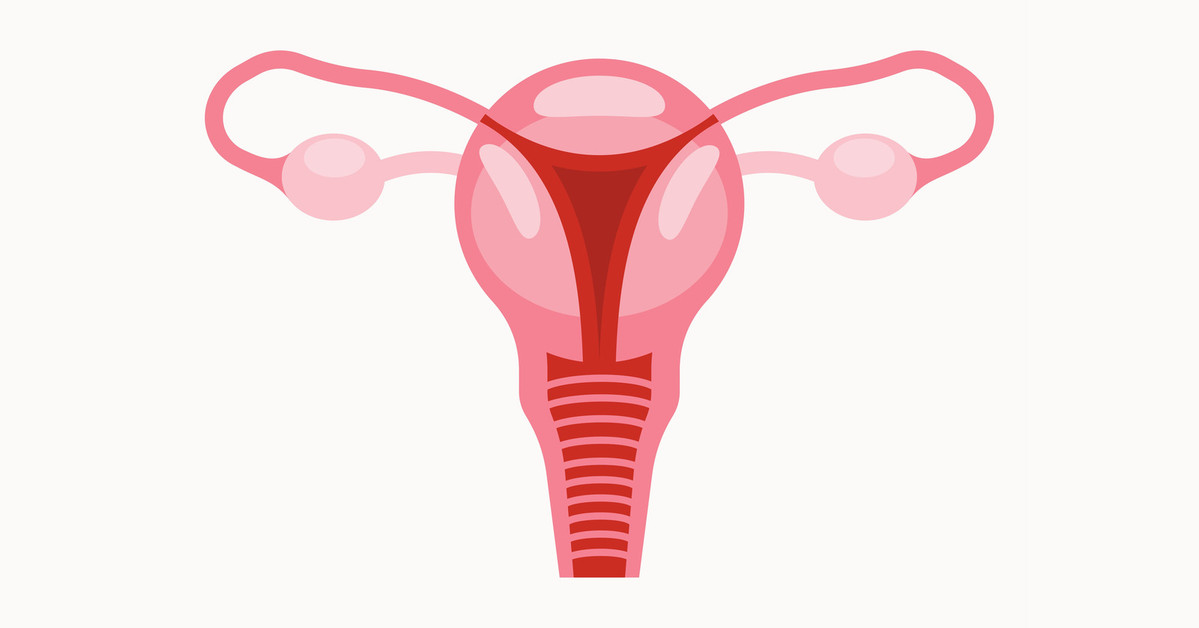
A blocked fallopian tube is one that eggs and sperm cannot pass through. The two tubes link the ovaries to the womb and eggs travel along them, so a blockage can stop an egg reaching the womb.5 Damage can affect one tube or both, and it can sit near the womb (a proximal blockage) or at the far end near the ovary (a distal blockage).1
A tube can also be damaged without being fully blocked. Infection or surgery can leave it scarred, and the scarring (adhesions) can make it harder for eggs to pass through.2,9
A hydrosalpinx is a tube that is blocked at the far end and has filled with fluid.10 It matters if you are thinking about IVF: a Cochrane review (a summary of all the trials on a question, with the quality of the evidence graded) describes it as a particularly severe form of tubal disease that lowers the chance of IVF working.10
What causes blocked fallopian tubes?
A major cause is pelvic inflammatory disease (PID), an infection of the womb, tubes and ovaries that can scar the tubes. PID is usually caused by sexually transmitted infections such as chlamydia and gonorrhoea.9,11
The NHS lists these other causes of tubal damage or a higher risk of it:9,12
- Endometriosis: tissue similar to the womb lining grows outside the womb and can damage the ovaries or tubes.
- Previous pelvic surgery: an operation can damage and scar the tubes.
- Previous ectopic pregnancy or tubal surgery: both are linked with problems in the tubes.
- Fibroids: non-cancerous growths in or around the womb that can sometimes block a tube.
If you have had PID, you are more likely to have trouble conceiving. In a Swedish study of women seen between 1960 and 1984, 16.0% of those whose PID was confirmed by laparoscopy did not conceive when they tried during the study's follow-up, compared with 2.7% of women whose laparoscopy was normal. The risk was higher after more, and more severe, infections.13 The study is decades old, so it cannot give today's figure. If it's diagnosed early, the NHS says PID can be easily treated with antibiotics.11
What are the signs of a blocked fallopian tube?
There may be no signs you would notice. Blocked tubes are found with tests such as an ultrasound scan, an HSG or a laparoscopy.5 The infections that most often damage the tubes are often silent too: most people with chlamydia have no symptoms, and not everyone with PID has symptoms.6,11
Some causes of tubal damage do have symptoms. PID can cause pelvic pain, pain deep inside during sex, heavy or painful periods that are unusual for you, bleeding between periods or after sex, and vaginal discharge that looks, smells or feels unusual for you.11 NICE mentions that some women with a hydrosalpinx also have long-term pelvic pain.4
If you think you have symptoms of PID, the NHS advises asking for an urgent GP appointment or contacting NHS 111. Do the same if you have pelvic pain that comes and goes, if you have symptoms of PID and are pregnant or think you might be, or if you have been diagnosed with PID and do not feel better after 3 days of antibiotics. Call 999 or go straight to A&E if:11
- you have pelvic pain that is severe, getting worse, or hurts when you move or touch the area
- you have pelvic pain with heavy vaginal bleeding
- you have a sharp, sudden and intense pain in your lower tummy
- you have pain under your ribs on the right side and in your right shoulder
- you feel dizzy or faint
- you have a very high temperature, or feel hot, cold or shivery
- you are feeling or being sick, or feel very unwell
How are fallopian tubes tested in the UK?
NICE recommends one of three tests. Women with no known risk factors are offered an HSG (hysterosalpingography), an X-ray of the womb and tubes after dye is passed into the womb. Where the expertise is available, NICE says a HyCoSy, an ultrasound version of the same test, can be considered instead. Women likely to have other pelvic problems are offered laparoscopy and dye (keyhole surgery to look at the tubes while dye is passed through them).4
The problems NICE has in mind include previous PID, a previous ectopic pregnancy and endometriosis.4 NICE also advises a chlamydia test before any test that passes an instrument into the womb, with treatment for you and your partner if it is positive.4
The three UK tests for blocked tubes
| Test | What happens |
|---|---|
| HSG4,5 | A special dye is passed into the womb and X-ray pictures show whether it flows out through the tubes. |
| HyCoSy4,5 | A small amount of fluid is passed into the womb through a tube in the cervix (the neck of the womb), and an ultrasound scan watches it move through the tubes. No X-rays are used. |
| Laparoscopy and dye5,14 | Keyhole surgery under general anaesthetic. A camera goes in through a small cut near the belly button, and dye is passed through the cervix to see whether it comes out of the tubes. |
Laparoscopy lets the surgeon look at the tubes and the other pelvic organs at the same time, which is why NICE suggests it when other problems are likely.4
What do the tests feel like?
An HSG and a HyCoSy can both be uncomfortable, and the ultrasound test seems to hurt less. A Dutch trial of 1,026 women who had both tests compared HSG with HyFoSy, a close relative of HyCoSy that uses a foam rather than a liquid. Average pain scores were 5.4 out of 10 for HSG and 3.1 out of 10 for HyFoSy.15 Your clinic can tell you what happens on the day, how long it takes and when in your cycle it will be done. It's reasonable to ask whether you can take a painkiller beforehand, and to bring someone with you if that would help.
Laparoscopy is different because you're asleep for it. Afterwards, the NHS says you may feel sick or tired, have bloating, cramps or shoulder pain, and have bruises around the cuts. Most people go home the same day or the day after, and recovery after a diagnostic laparoscopy usually takes up to 10 days.14
If you are having a laparoscopy, complications are rare, but the NHS lists needing open surgery with a larger cut, a hernia, damage to an organ such as the bladder or to a blood vessel, a serious allergic reaction to the anaesthetic, and blood clots.14
Ask for an urgent GP appointment or contact NHS 111 if, after a laparoscopy, you have a high temperature or feel hot, cold or shivery, severe or continuous vomiting, worsening tummy pain, a bloated tummy, unusual bleeding or discharge from your vagina or bottom, pain and swelling in one leg, coughing up blood, difficulty breathing, or pain, swelling, bleeding, redness or pus around a wound. Call 999 or go to A&E if you have a very fast heartbeat, chest pain or severe difficulty breathing.14
How are the results read, and can they be wrong?
A result that shows dye flowing out of both tubes is reassuring: NICE calls HSG a reliable test for ruling out a blockage.4 A result that shows a blockage near the womb is less certain, because the tube can tighten for a moment during the test (tubal spasm) and look blocked when it is open.7 A 2007 review noted that, in some studies, up to half of diagnoses of a blockage near the womb can turn out to be false.16
That is why, if your result says "blocked", it is often checked again. In a small trial of 146 women in Thailand, women were given either a muscle-relaxing medicine or a dummy treatment (placebo) before the HSG. The medicine lowered the number of women whose tubes looked blocked near the womb, and in the placebo group, most of the "blocked" results that were checked again turned out to be wrong.8
In nine studies where women had an ultrasound tube test (such as HyCoSy), an HSG and a laparoscopy, the two tests were similarly accurate: each correctly found about 94 to 95 in 100 of the blocked tubes seen at laparoscopy.17 In the Dutch foam trial, the X-ray and foam tests gave the same answer for most women. Overall, treatment decisions based on either test led to similar numbers of births, although the trial was not able to show for certain that the foam test was as good.15
Can you get pregnant with a blocked fallopian tube?
Yes, many women can. If you have one open tube, natural conception or IUI (intrauterine insemination, where sperm is placed in the womb) is still possible. A review of mostly retrospective studies (which looked back at past records) found that women with one tube blocked near the womb had similar IUI pregnancy rates to women with both tubes open.1
The same review found lower pregnancy rates when the blockage was at the far end of the tube, and its authors pointed to significant gaps in the evidence.1 The NHS says most women who have had an ectopic pregnancy will be able to get pregnant again, even if a fallopian tube was removed.12
If both tubes are badly damaged, the NHS says PID scarring can make it virtually impossible for an egg to travel down into the womb.9 Surgery may help some women whose tubes are only mildly damaged, and IVF works without the tubes, because eggs are collected from the ovaries and an embryo is placed straight into the womb.2,4
How are blocked fallopian tubes treated?
The options for you depend on where the blockage is and how badly your tubes are damaged. NICE suggests tubal surgery for mild damage, a fine catheter to clear a blockage near the womb, and IVF when other treatments are not suitable. For a hydrosalpinx, NICE recommends removing or blocking the tube before IVF.4
Tubal surgery
Surgery can break up scar tissue in the tubes, and how well it works depends on how badly they are damaged.2 NICE advises considering it for mild tubal disease in centres with the right expertise, but not for moderate or severe damage, because older studies suggest it may not work for more damaged tubes. NICE found no randomised trials on this question.4 The NHS says possible complications of tubal surgery include an ectopic pregnancy.2
Tubal catheterisation
For a blockage near the womb, a fine tube (catheter) can be passed into the fallopian tube, guided by X-ray or by a camera in the womb, to try to clear it. NICE advises considering this after discussing the other options, including IVF.4 In the studies NICE reviewed, none of which had a comparison group, 16 in 100 women with blockages in both tubes went on to have a baby, and NICE described the evidence as very low quality. Without a comparison group, these figures cannot show how catheterisation compares with IVF. NICE noted that the reported rates of ectopic pregnancy, miscarriage and damage to the tube (perforation) after catheterisation were low.4
IVF
NICE recommends offering IVF to women under 42 where there is a diagnosed cause of infertility and other treatments are not suitable or have not worked.4 In England, who gets NHS-funded IVF is decided locally by integrated care boards (ICBs, the NHS bodies that plan local services), so access varies by area. The HFEA (the UK fertility regulator) explains how funding works where you live.18,19
Removing a hydrosalpinx before IVF
Fluid from a hydrosalpinx can lower the chance of IVF working, so NICE recommends keyhole surgery to remove the tube (salpingectomy) or block it near the womb before IVF.4,10 Draining the fluid with a needle around the time of egg collection is an option if surgery would be risky.4
A 2020 Cochrane review of 11 trials, pooling four of them (455 women), found that salpingectomy probably raises the chance of a clinical pregnancy (a pregnancy seen on a scan). Among women with a hydrosalpinx having IVF, about 19 in 100 had a clinical pregnancy without surgery, and the reviewers estimated the figure after salpingectomy was probably somewhere between 27 and 52 in 100. The evidence was not precise enough to narrow it.10 None of the trials in that comparison reported live births, so we do not know how many of these pregnancies led to a baby.10
Does flushing the tubes help?
The dye used in an HSG washes through the tubes, which is sometimes called flushing. Some women become pregnant in the months after a tube test, and the type of dye may matter.20 In a separate Dutch trial, 1,119 women had an HSG as part of fertility tests. Of those given an oil-based dye, 38.8% had a baby from a pregnancy that began within six months, compared with 28.1% after a water-based dye.21 Across all the trials, a separate Cochrane review on tubal flushing rated the evidence that oil-based dye raises the chance of pregnancy as low quality.20
Keep in mind that the trial looked at women having routine tube tests, not at clearing known blockages.21 The Cochrane review also found that oil-based dye leaks into small blood vessels more often than water-based dye, usually without symptoms, and that side effects were poorly reported across studies.20
Are blocked or damaged tubes linked with ectopic pregnancy?
Yes. An ectopic pregnancy (one that grows outside the womb, usually in a tube) sometimes happens when a tube is narrow or blocked. The NHS lists PID, previous tubal surgery, a previous ectopic pregnancy and fertility treatment such as IVF as risk factors.12 After one ectopic pregnancy, the NHS puts the risk of another at around 10%.12
If you've had an ectopic pregnancy before, the NHS suggests letting your GP know as soon as possible when you're pregnant again, so early scans can be done.12
An ectopic pregnancy does not always cause symptoms. When it does, they usually start between the 4th and 12th week of pregnancy and can include tummy pain low down on one side, vaginal bleeding or a brown watery discharge, pain in the tip of your shoulder, and discomfort when peeing or pooing. Contact your GP or NHS 111 if you have a combination of these and might be pregnant, even if you have not had a positive pregnancy test.12
Call 999 or go to A&E if you might be pregnant and have a sharp, sudden and intense pain in your tummy, feel very dizzy or faint, feel sick or look very pale. These can be signs that a tube has burst.12
Can diet, herbs or massage unblock fallopian tubes?
No diet, supplement, herb, massage or castor-oil pack has been shown in good-quality trials to unblock fallopian tubes. The NHS says there's no evidence that complementary therapies for fertility problems are effective.2
Our own search of Europe PMC, a large database of medical research, in October 2026 found no trial at all of any diet, supplement or castor-oil pack for blocked tubes. For massage, the only study found looked back at 28 women treated at the clinic that offers the therapy, with no comparison group.22 For herbs, a 2023 review of 23 trials looked at Chinese herbal enemas given alongside tubal surgery, not instead of it, and its authors said better-quality trials are needed.23
When should you see a GP, and what happens next?
The NHS says it's a good idea to see a GP if you have not conceived after a year of trying. If you're 36 or over, or you already know you may have fertility problems, you should see your GP sooner.3 Your GP can start some tests and refer you to a fertility clinic, and a male partner should be offered tests too, including a semen test, because NICE advises assessing both partners.4,5 NICE counts endometriosis, long-term PID, a past ectopic pregnancy and several abdominal or pelvic operations as reasons to offer a specialist referral straight away.4
If you have a miscarriage or an ectopic pregnancy during that first year of trying, NICE says that time still counts towards the year, so you do not start counting again from zero.4
Every fertility clinic licensed by the HFEA must offer you the chance to see a counsellor before treatment starts, and your GP can tell you about counselling on the NHS.24 Fertility Network UK runs a free support line and an online community.18
Some questions you might want to ask:
- Which test am I having, when in my cycle will it be done, and can I have pain relief?
- Who will explain my results, and when?
- Has my partner had a semen test?
- Is one tube affected or both, and is the blockage near the womb or at the far end?
- Could the result be spasm, and will it be checked again?
- Is there a hydrosalpinx, and should it be treated before IVF?
- Would tubal surgery or catheterisation suit me, or is IVF the better route?
- Am I eligible for NHS-funded IVF in my area?
If no cause is found for your fertility problems, our guide to unexplained infertility explains the usual next steps.
Frequently Asked Questions
Can you get pregnant with blocked fallopian tubes?
Often, yes. With one open tube, pregnancy without treatment is still possible, and studies of women with one tube blocked near the womb found pregnancy rates after IUI similar to those of women with both tubes open.1 If both tubes are blocked, IVF can work without them, because the embryo is placed straight into the womb.2
What are the signs of a blocked fallopian tube?
There may be none. Blocked tubes are usually found with fertility tests such as an HSG, a HyCoSy or a laparoscopy.5 Infections that can damage the tubes, such as chlamydia, often cause no symptoms either.6 Pelvic inflammatory disease can cause pelvic pain, pain during sex or unusual periods. If you think you have PID symptoms, the NHS advises asking for an urgent GP appointment or contacting NHS 111. For the severe signs listed earlier in this guide, it advises calling 999 or going straight to A&E.11
How are blocked fallopian tubes unblocked?
It depends on where the blockage is. NICE suggests surgery for mild tubal damage and, for a blockage near the womb, a fine catheter passed into the tube to try to clear it.4 When the tubes are badly damaged, IVF is usually the option. A fluid-filled tube is usually removed or blocked before IVF.4
Is an HSG test painful?
It can be uncomfortable. In a Dutch trial, women rated an HSG at 5.4 out of 10 for pain on average, compared with 3.1 for HyFoSy, a foam ultrasound tube test.15 Your clinic can tell you how long it takes, and it's reasonable to ask whether you can take a painkiller beforehand or bring someone with you.
Can an HSG test help you get pregnant?
It may. In a Dutch trial of 1,119 women having an HSG during fertility tests, more had a baby after an oil-based dye than after a water-based dye.21 That trial looked at routine testing, not at clearing known blockages. Oil-based dye has its own small risks, so ask your clinic which dye they use and why.20
Can a blocked fallopian tube clear on its own or with natural remedies?
A tube that looks blocked on an HSG is sometimes open, because spasm during the test can make it look closed, so a repeat test may show it was open all along.7,8 No good-quality trial has shown that diet, supplements, herbs, massage or castor-oil packs clear a blocked tube, and the NHS says there's no evidence that complementary fertility therapies are effective.2
Related Reading
-
Unexplained Infertility: What It Means and What You Can Do
what happens when the usual tests, including tube tests, come back normal. -
AMH Levels and Fertility
what this common fertility blood test measures and what it does not tell you.
References
- Yip JY, Kanneganti A, Binte Ahmad N, Lim MXK, Chew SLS, Huang Z. Optimizing intrauterine insemination and spontaneous conception in women with unilateral hydrosalpinx or tubal pathology: a systematic review and narrative synthesis. European Journal of Obstetrics and Gynecology and Reproductive Biology. 2023;286:135-144. doi:10.1016/j.ejogrb.2023.05.024
- National Health Service (NHS). Treatment: Infertility. Page last reviewed 9 August 2023. https://www.nhs.uk/conditions/infertility/treatment/. Accessed 20 October 2026.
- National Health Service (NHS). Infertility. Page last reviewed 9 August 2023. https://www.nhs.uk/conditions/infertility/. Accessed 20 October 2026.
- National Institute for Health and Care Excellence (NICE). Fertility problems: assessment and treatment (NG257). Published 31 March 2026 (updates and replaces CG156). Chapters used: Defining infertility and initial assessment (1.16.5 to 1.16.8); Investigation of fertility problems and management strategies (1.18.13 to 1.18.15, 1.22.1 to 1.22.3); Management of female factor fertility problems (1.34.1 to 1.34.4); Access criteria for IVF (1.39.3); Terms used in this guideline; Rationale and impact (tubal surgery, tubal catheterisation, surgery for hydrosalpinges before IVF). https://www.nice.org.uk/guidance/ng257. Accessed 20 October 2026.
- National Health Service (NHS). Diagnosis: Infertility. Page last reviewed 9 August 2023. https://www.nhs.uk/conditions/infertility/diagnosis/. Accessed 20 October 2026.
- National Health Service (NHS). Chlamydia. Page last reviewed 24 October 2024. https://www.nhs.uk/conditions/chlamydia/. Accessed 20 October 2026.
- Ojie CV, Onyeowuzon O, Odionwunaka C, Agholor KN, Onyemesili JC, Ebeigbe PN. Oral diclofenac potassium and intramuscular hyoscine-n-butyl bromide versus oral diclofenac potassium alone for pain relief during hysterosalpingography: a double blind randomized controlled trial. African Journal of Reproductive Health. 2026;30(2):121-129. doi:10.29063/ajrh2026/v30i2.10
- Jitchanwichai A, Soonthornpun K. Effect of premedication hyoscine-N-butylbromide before hysterosalpingography for diagnosis of proximal tubal obstruction in infertile women: a randomized double-blind controlled trial. Journal of Minimally Invasive Gynecology. 2019;26(1):110-116. doi:10.1016/j.jmig.2018.03.034
- National Health Service (NHS). Causes: Infertility. Page last reviewed 9 August 2023. https://www.nhs.uk/conditions/infertility/causes/. Accessed 20 October 2026.
- Melo P, Georgiou EX, Johnson N, van Voorst SF, Strandell A, Mol BWJ, Becker C, Granne IE. Surgical treatment for tubal disease in women due to undergo in vitro fertilisation. Cochrane Database of Systematic Reviews. 2020;10(10):CD002125. doi:10.1002/14651858.CD002125.pub4
- National Health Service (NHS). Pelvic inflammatory disease. Page last reviewed 17 December 2025. https://www.nhs.uk/conditions/pelvic-inflammatory-disease-pid/. Accessed 20 October 2026.
- National Health Service (NHS). Ectopic pregnancy. Page last reviewed 23 August 2022. https://www.nhs.uk/conditions/ectopic-pregnancy/. Accessed 20 October 2026.
- Weström L, Joesoef R, Reynolds G, Hagdu A, Thompson SE. Pelvic inflammatory disease and fertility. A cohort study of 1,844 women with laparoscopically verified disease and 657 control women with normal laparoscopic results. Sexually Transmitted Diseases. 1992;19(4):185-192. doi:10.1097/00007435-199207000-00001
- National Health Service (NHS). Laparoscopy (keyhole surgery). Page last reviewed 20 December 2023. https://www.nhs.uk/tests-and-treatments/laparoscopy/. Accessed 20 October 2026.
- van Welie N, van Rijswijk J, Dreyer K, van Hooff MHA, de Bruin JP, Verhoeve HR, et al. Can hysterosalpingo-foam sonography replace hysterosalpingography as first-choice tubal patency test? A randomized non-inferiority trial. Human Reproduction. 2022;37(5):969-979. doi:10.1093/humrep/deac034
- Das S, Nardo LG, Seif MW. Proximal tubal disease: the place for tubal cannulation. Reproductive BioMedicine Online. 2007;15(4):383-388. doi:10.1016/S1472-6483(10)60362-8
- Maheux-Lacroix S, Boutin A, Moore L, Bergeron ME, Bujold E, Laberge P, Lemyre M, Dodin S. Hysterosalpingosonography for diagnosing tubal occlusion in subfertile women: a systematic review with meta-analysis. Human Reproduction. 2014;29(5):953-963. doi:10.1093/humrep/deu024
- National Health Service (NHS). IVF (in vitro fertilisation). Page last reviewed 15 April 2025. https://www.nhs.uk/tests-and-treatments/ivf/. Accessed 20 October 2026.
- Human Fertilisation and Embryology Authority (HFEA). Costs and funding. Published 5 April 2016. https://www.hfea.gov.uk/treatments/explore-all-treatments/costs-and-funding/. Accessed 20 October 2026.
- Wang R, Watson A, Johnson N, Cheung K, Fitzgerald C, Mol BWJ, Mohiyiddeen L. Tubal flushing for subfertility. Cochrane Database of Systematic Reviews. 2020;10(10):CD003718. doi:10.1002/14651858.CD003718.pub5
- Dreyer K, van Rijswijk J, Mijatovic V, Goddijn M, Verhoeve HR, van Rooij IAJ, et al. Oil-based or water-based contrast for hysterosalpingography in infertile women. New England Journal of Medicine. 2017;376(21):2043-2052. doi:10.1056/NEJMoa1612337
- Wurn BF, Wurn LJ, King CR, Heuer MA, Roscow AS, Hornberger K, Scharf ES. Treating fallopian tube occlusion with a manual pelvic physical therapy. Alternative Therapies in Health and Medicine. 2008;14(1):18-23. PubMed PMID 18251317. https://pubmed.ncbi.nlm.nih.gov/18251317/
- Xu S, Jin S, Yang L, Wang L, Zhang Q. Evidence-based complementary and alternative medicine conventional surgery combined with traditional Chinese medicinal retention enema for tubal obstructive infertility: a systematic review and meta-analysis. PLoS One. 2023;18(5):e0285859. doi:10.1371/journal.pone.0285859
- Human Fertilisation and Embryology Authority (HFEA). Getting emotional support. Published 11 March 2016, last reviewed 8 September 2026. https://www.hfea.gov.uk/treatments/explore-all-treatments/getting-emotional-support/. Accessed 20 October 2026.

Marina Carter
Health & Fertility Writer
Marina Carter is FertilitySmart's lead writer on fertility, preconception health, and reproductive nutrition. She translates the clinical and nutritional evidence base into honest, practical guidance for individuals and couples trying to conceive, working closely with the product team to ensure every article reflects current peer-reviewed research and the lived emotional reality of the fertility journey. Read Full Bio →